The Great Commission
Most of us are familiar with the Great Commission: "Go therefore and make disciples of all nations, baptizing them in the name of the Father and of the Son and of the Holy Spirit, teaching them to observe all that I have commanded you" (Matt 28:19-20). But few of us actually know how to obey Jesus' command. We have many questions: What is a disciple? What does a disciple do? What does discipleship look like in the home? How do we implement discipleship in our churches? How do we help new converts become disciples of Jesus? This website is designed to answer those questions, and to provide resources which will help you carry out Christ's great command.
What is a Disciple?
A disciple is anyone who desires to learn from and follow after someone else. For Christians, that 'someone else' is Jesus Christ. He is our master, and our goal as His disciple is to learn His teachings, model His way of living, adopt His values, embrace His beliefs, and become like Him in our actions, attitudes, and words. The master-disciple relationship may sound a little strange to us today. Perhaps the best modern equivalent that we can relate to is the coach-player relationship. When you join a sports team, you become a 'disciple' of your coach. You place yourself under his authority and agree to do whatever he tells you. Your goal is to learn to think about the game like your coach—to model his attitudes and actions, and follow his direction. You are subject to his correction and discipline, and you work hard to earn his praise and respect. Being a member of a professional sports team is not a part-time endeavor. It affects every area of your life. It’s the same way with being a disciple of Jesus. It's a life-long commitment that will require you to give 100% in order to be successful.
Personal Discipleship: What does a disciple do?
We often think of discipleship as something that involves a group of people. But actually, being a disciple is something that each of us does individually. That means we must:
Family Discipleship: What does discipleship look like in the home?
Our discipleship efforts are often focused on new converts and other members of the church (and there's nothing wrong with that), but we can't forget that we need to disciple our own families! That means we must:
Church Discipleship: What does discipleship look like in the church?
New Convert Discipleship: How do we help new converts become disciples of Jesus?
Most of us are familiar with the Great Commission: "Go therefore and make disciples of all nations, baptizing them in the name of the Father and of the Son and of the Holy Spirit, teaching them to observe all that I have commanded you" (Matt 28:19-20). But few of us actually know how to obey Jesus' command. We have many questions: What is a disciple? What does a disciple do? What does discipleship look like in the home? How do we implement discipleship in our churches? How do we help new converts become disciples of Jesus? This website is designed to answer those questions, and to provide resources which will help you carry out Christ's great command.
What is a Disciple?
A disciple is anyone who desires to learn from and follow after someone else. For Christians, that 'someone else' is Jesus Christ. He is our master, and our goal as His disciple is to learn His teachings, model His way of living, adopt His values, embrace His beliefs, and become like Him in our actions, attitudes, and words. The master-disciple relationship may sound a little strange to us today. Perhaps the best modern equivalent that we can relate to is the coach-player relationship. When you join a sports team, you become a 'disciple' of your coach. You place yourself under his authority and agree to do whatever he tells you. Your goal is to learn to think about the game like your coach—to model his attitudes and actions, and follow his direction. You are subject to his correction and discipline, and you work hard to earn his praise and respect. Being a member of a professional sports team is not a part-time endeavor. It affects every area of your life. It’s the same way with being a disciple of Jesus. It's a life-long commitment that will require you to give 100% in order to be successful.
Personal Discipleship: What does a disciple do?
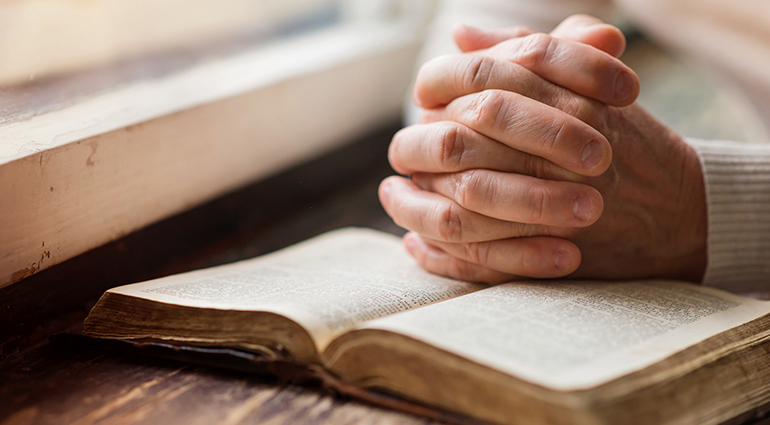
We often think of discipleship as something that involves a group of people. But actually, being a disciple is something that each of us does individually. That means we must:
- Take time — when we got saved, we began a relationship with Jesus Christ. As we all know, relationships take time. If we don't schedule time for personal discipleship, it won't happen. Jesus left us an example: He regularly left His disciples, went off by Himself, and spent time alone with God (Luke 5:16). We need to do the same. Find a place where you can be alone, and eliminate as many distractions as possible. Quiet yourself, clear your mind, and push the cares and responsibilities of the day to the side.
- Listen to God — I use the phrase 'listen to God' because I want to emphasize that when we read the Bible, God is speaking directly to us. Most people think of reading as a solitary activity, but when we read Scripture, we have just entered into a conversation with our Heavenly Father!
- Talk to God — When you're done reading God's Word, remind yourself that God has just spoken directly to you. The only polite thing to do is to respond. If a friend spent ten minutes talking to you, and then you replied on a different topic, completely ignoring what they just said, how would they feel? Yet that is often how we interact with God. We need to process what God just said to us, and then respond to Him in prayer.
- Be accountable — Find a fellow Christian to whom you can be accountable. Humble yourself and confess your faults to them (Prov 28:13; Jam 5:16). Ask them to enter into a commitment of accountability with you. We are not meant to live the Christian life apart from the help and encouragement of the church. That is why accountability to other believers is so important (cf. Heb 3:12–14; 10:23–25; 1 Thess 5:11; Gal 6:1–2).
Family Discipleship: What does discipleship look like in the home?
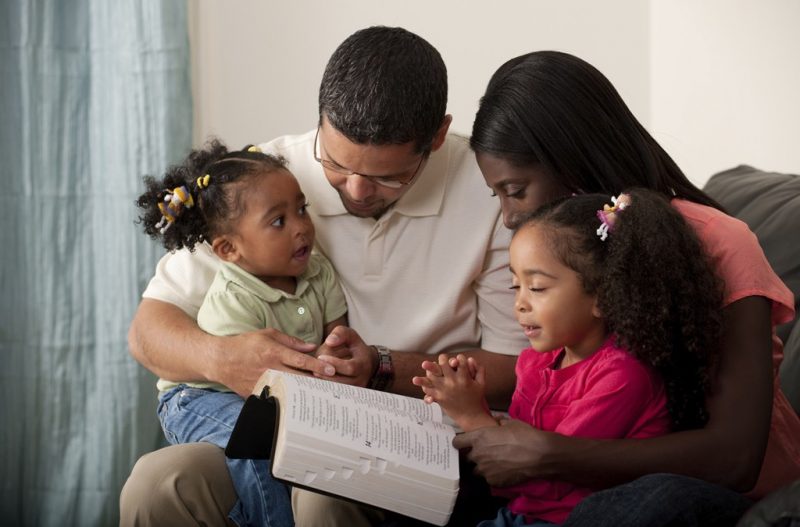
Our discipleship efforts are often focused on new converts and other members of the church (and there's nothing wrong with that), but we can't forget that we need to disciple our own families! That means we must:
- Lead — Encourage each member of your family to practice personal discipleship. The husband should lead by example, and the wife and children should follow the husband’s leadership. When an entire family is engaged in personal discipleship, the results are amazing. I recommend that you have your family on a common reading plan—this will facilitate discussions of God’s Word.
- Fellowship — Take time each day (around the table after dinner is good) to discuss what God has said (the daily reading). Share ideas and personal applications. Help your wife and children develop the habit of discussing their relationship with God: what they’re learning, how they’re growing, what God has been saying to them, etc. This will prepare them to discuss spiritual things with people outside your family.
- Teach — Schedule a time each week when your family gets together for a discipleship lesson. Make this occasion special, something your family will look forward to during the week (by having a special treat, snack, pizza, etc., anything that will create a positive association with the activity). Pick a lesson from the website (see the “Lessons” menu) and cover the material. Encourage questions—don’t worry about covering the entire lesson in a single session. As time goes on, and your family gets used to the basic activity, have your children take turns being the “teacher”—this will prepare them to host a discipleship group of their own one day. If your children grow up with daily discussions of God’s Word and weekly discipleship lessons, it will be natural and normal for them to disciple others.
Church Discipleship: What does discipleship look like in the church?
- Promote personal discipleship — Tell your congregation that you are committed to practicing personal discipleship and lead by example. Call on the men in your church to step up and be an example to their families. Imagine a church where everyone was practicing personal discipleship each day!
- Promote family discipleship — Explain the basic format of family discipleship to your congregation, and encourage them to begin immediately. If you can get your entire church on the same reading plan, it will be very helpful in promoting discussions of what everyone is learning from God’s Word.
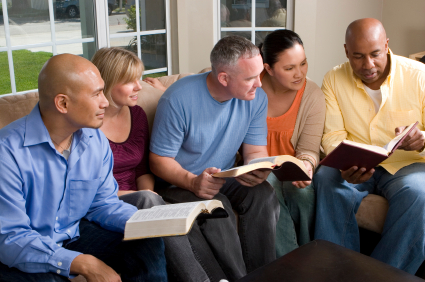
- Train your core — Take stock of your congregation and decide which individuals make up your core (the people you can always count on, the people who are there every time the doors are open, the people who testify that God is doing something in their lives). Choose one or two couples from this core (three at the most), and begin a weekly discipleship session with them. It doesn’t matter if they are the most mature and/or knowledgeable people in your church—your goal is to train them to disciple others, not necessarily to increase their knowledge base (although that will probably happen too). As in family discipleship, make the occasion a time of food and fellowship—part of discipleship is building close friendships. As time goes on, have them take turns leading the sessions—this will prepare them to host discipleship groups of their own. Your goal here is to spend a year or two with these couples, and then have them pick out another couple in the church and begin discipling them. They should know at the beginning that this is the natural progression—be discipled so that you can then disciple others.
New Convert Discipleship: How do we help new converts become disciples of Jesus?
- Nurture — New converts are like babies, and they need lots of love, care and supervision. Work to build a strong relationship with your new converts, and interact with them daily so you can counsel them and guide their progress (you can do this via text, Facebook, email, etc. if direct interaction isn’t feasible).
- Promote personal discipleship — As soon as you can (you will need to cover the basics with them first), encourage your new converts to practice personal discipleship. Hold them accountable and praise them as they begin to grow and mature in this important discipline.
- Teach weekly — Schedule a time each week when you get together with your new converts for a discipleship lesson. If possible, do this in the home of your new convert. People are most comfortable in their own environment—it makes sharing and accountability much easier. You can also invite them to your home and take turns with hosting the lessons. Start by having a snack and sharing your week. Be prepared to address issues that come up during this time of fellowship. Sometimes a problem is mentioned that may need to take precedence over the intended lesson—be sensitive to what they need to talk about. Also, be transparent—let them know that you struggle with things just like they do. Always begin with prayer. Ask God to open your hearts and minds to His truth. We cannot disciple others without the help and guidance of the Holy Spirit. Cover the material for that day’s lesson. If you encounter questions during the lesson that you cannot answer, be honest and tell them that you don’t know. Write their questions down and then follow up next week with the answers. Conclude with prayer and ask God to help them throughout the upcoming week. As time goes on, and your new converts get used to the basic activity, have them take a turns being the “teacher”—this will prepare them to host a discipleship group of their own one day.